Betsy and Adam: Freedom, Labor, and the Price of Land
A bound-out girl and a self-emancipated man build a life on the Virginia-Tennessee border.
Adam Waterford bought his freedom for five hundred dollars.
He had been enslaved by Captain James Thompson of Washington County, Virginia. When Thompson died in February 1811, his son William purchased Adam from the estate and emancipated him on credit. William later testified that he wanted Adam to “have an opportunity to become free.” Adam agreed to pay the $500 as he could, and William, “trusting to his credit, did so emancipate him.”
Five hundred dollars in 1811 was a staggering sum. A good horse cost fifty. A decent tract of land might run two dollars an acre. Adam was buying himself at the price of a small farm.
And then came the clock. Virginia’s 1806 law required newly freed persons to leave the state within twelve months or face re-enslavement. Adam had one year to pay off his freedom, establish himself, and get out.
The Scramble
Adam stayed in Burke’s Garden working for William Thompson — clearing six acres of meadow, four acres of tillage, all “remarkably heavy timbered land,” and tending cattle. He worked ten months. Then, with his twelve months almost up, he tried to buy 200 acres in Muhlenberg County, Kentucky, paying $400 in horses, cattle, and cash.
The deal collapsed. Thompson’s wife refused to sign the deed, saying she “would not convey any land which her husband had obtained by her, but that she would keep them for her children.”
Adam was illiterate. He couldn’t read the bond. He handed his papers to a colonel he’d never met and trusted they’d be there when he came back. When the Kentucky deal fell through, he contracted for 170 acres back in Burke’s Garden — the place he’d just cleared with his own hands.
This is a pattern you see over and over in the records of free Black landowners: a man works land, improves it, tries to buy it, gets tangled in someone else’s debts or a wife’s dower rights or a broken promise. Adam spent the rest of his life in court trying to secure title to land he’d already paid for.
Betsy
Betsy’s story starts differently but rhymes. As a girl, she was bound out to the widow Preston in Montgomery County — the same county where her mother Lisha had been documented in 1793. When Adam Waterford later asked Austin Day whether his sister Betsy could read, Austin said no. When Adam asked about her “freedom dues” — the clothing and tools owed to a servant at the end of their term — Austin hadn’t seen any.
Virginia law required that masters of bound children teach them to read and provide freedom dues at the end of their indenture. The widow Preston did neither. She eventually sent word for Lisha to come take Betsy away. Lisha borrowed Phillip Ashby’s horse, rode to Montgomery County with Austin, and brought her daughter home.
Home, in this case, was the Ashby household. And that’s where the next chapter of unpaid labor began. Betsy lived with Ashby for six to seven years. Adam claimed she worked the whole time for Ashby’s benefit. However, Ashby said his stepdaughter had free room and board, took in weaving for the neighbors, and kept her own profits. Austin’s deposition sometimes sided with Adam: Betsy “worked a good part of her time for the benefit of” her stepfather and “I do not recollect of her getting any pay for it.”
Eventually Betsy married Adam. They settled near the Sullivan County line. And then Adam sued his father-in-law.
The Takeaway for Researchers
Adam’s emancipation deed was recorded in Washington County, Virginia. That’s a potentially findable document — and if you’re researching the Thompson family or free Blacks in Washington County, it’s a must-find. But the story behind the deed — the credit arrangement, the Kentucky land deal, the wife who wouldn’t sign — likely none of that is in the deed itself. It’s in the chancery case Adam filed twenty-five years later, which ended up in Wythe County after a judge recused himself, and which was continued in David Waterford’s name after Adam died.
If you find an emancipation deed for an ancestor, don’t stop there. Search the chancery records of every county that person may have touched. The deed tells you someone became free. The chancery case tells you what freedom actually looked like.
Adam died before October 1835. His father David took over his lawsuit. We don’t know what happened to Betsy (yet).
In the next post, we’ll return to Scott County and the Clinch River, where Barbara Day was fighting her own battle for freedom — and where the Ashby family did something that could have gotten them killed.
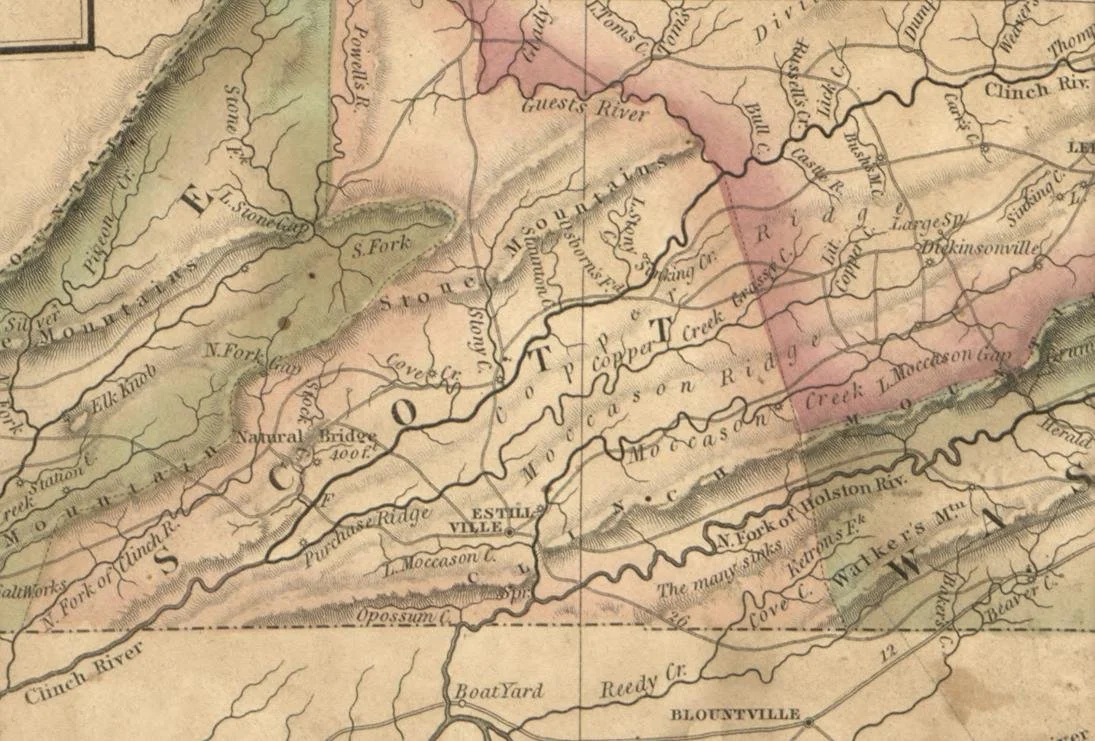
Part 3 of 5 in the Series: “Bound, Free, and In Between: Free People of Color in Scott County, Virginia”
This five part series is based on original research conducted in February–March 2026 using digitized records from FamilySearch, the Library of Virginia’s Chancery Records Index, and the Virginia Untold collection. Profiles for many of the individuals discussed are available or forthcoming on WikiTree. The research is ongoing.