Lisha Grant’s Children: A Free Black Family Between Two States
A mother, a stepfather, and seven children navigating freedom in Virginia and Tennessee.
In July 1793, a woman named Lisha Grant was living at Robert Christian’s residence near the Montgomery County courthouse in Virginia. We know this because thirty-one years later, a man named Stephen Jett signed a certificate saying so — noting it was by his wife’s account.
That’s it. That’s all we have for her earliest years. One sentence, secondhand, recorded because a lawsuit in a different county decades later needed to establish who she was and where she had been.
Welcome to African American genealogy.
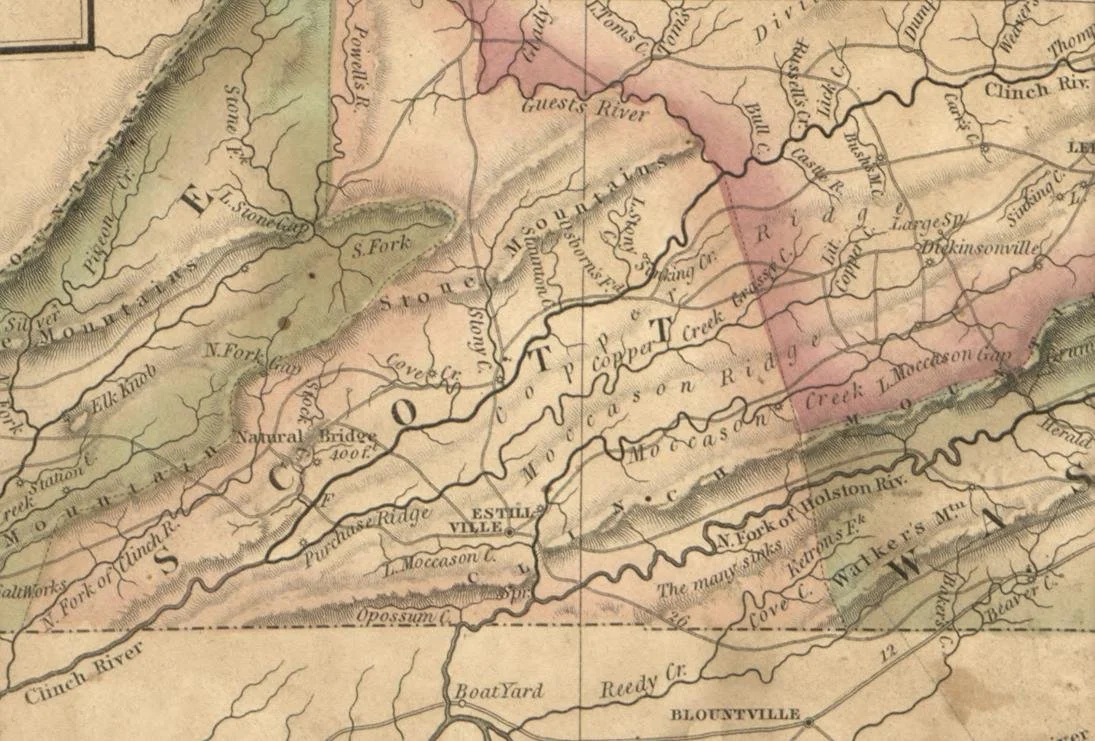
But here’s what makes this work rewarding: by the time I finished tracing Lisha through the records, I had identified seven of her children by name. I knew that she’d partnered with a man named Phillip Ashby near Osborne’s Ford on the Clinch River in Scott County. I knew that she’d traveled to Montgomery County on Ashby’s horse to retrieve a daughter from an indenture. I knew that her children may have used two different surnames — Day and Ashby — and that the family stretched from the mountains of southwest Virginia into Sullivan and Hawkins Counties in Tennessee.
None of this came from a family Bible or a neatly filed vital record. It came from people arguing in court.
The Household at Osborne’s Ford
By the time Scott County’s records pick up the story, Lisha was living with Phillip Ashby, a free man of color who appears on the personal property tax lists from 1817 onward. In 1817, Phillip owned four horses — significant property for anyone in the rural Clinch River valley, and remarkable for a free Black man. By 1820, his census household included seven free persons of color across three generations. No enslaved persons.
Phillip was a craftsman. Court testimony describes him making riddles (grain sieves), baskets, and sifters, and traveling to Burke’s Garden in Tazewell County for work. He traded goods for wool. He was industrious, mobile, and connected.
He was also, by several accounts, difficult. His stepdaughter’s husband accused him of keeping Betsy’s labor for years without pay. His stepson Austin testified against him in court. The family was divided — Rachel sided with Ashby, Austin’s deposition at times sided with Betsy and Adam.
The Children
Lisha’s children, as identified through the Waterford v. Ashby testimony, were: Austin Day, Juliet (who may have used the surname Ashby), Rachel Day, Betsy (who married Adam Waterford), William, Isaiah, and Dolia or Delia. The last three are mentioned only in passing.
The surnames tell their own story. Austin and Rachel used “Day.” Juliet may have used “Ashby,” her stepfather’s name. Betsy is recorded only as Waterford after her marriage. We don’t know who the Day father was. We don’t know if all seven children shared the same biological father, or if some were Ashby’s. The records don’t say, and I’m not going to guess.
What we do know is that these siblings stayed connected across distance. Austin traveled from Tennessee to bring Juliet to work in Sullivan County. He went back to get her when the arrangement went wrong. He accompanied his mother to Montgomery County to retrieve Betsy when she was bound out. Years later, living in Hawkins County, Tennessee, he gave sworn depositions on behalf of his sister and brother-in-law.
Family mattered to these people. The records make that very clear.
A Note on Sources
One thing I want to flag for newer researchers: the names in this family came almost entirely from one chancery case. Not from census records, not from birth certificates, not from a family tree someone posted online. From a lawsuit about a handkerchief and some sheep.
If I had only searched the census and tax lists, I would have found “Phillip Ashby, free man of colour” and “Austin Day, free man of colour” as separate, unrelated entries. The chancery case is what connected them — and connected them to Lisha, to the Waterford family, and ultimately to Barbara Day.
In the next post, I’ll tell you about Betsy’s story — bound out to a widow in Montgomery County as a child, retrieved by her mother, put to work by her stepfather, and finally married to a formerly enslaved man who bought his freedom for $500 and spent the rest of his short life trying to hold onto land.
Part 2 of 5 in the Series: “Bound, Free, and In Between: Free People of Color in Scott County, Virginia”
This five part series is based on original research conducted in February–March 2026 using digitized records from FamilySearch, the Library of Virginia’s Chancery Records Index, and the Virginia Untold collection. Profiles for many of the individuals discussed are available or forthcoming on WikiTree. The research is ongoing.