The Rescue at Osborne’s Ford
When Isaac Richmond came for Barbara Day, three men stopped him — and two of them were free men of color.
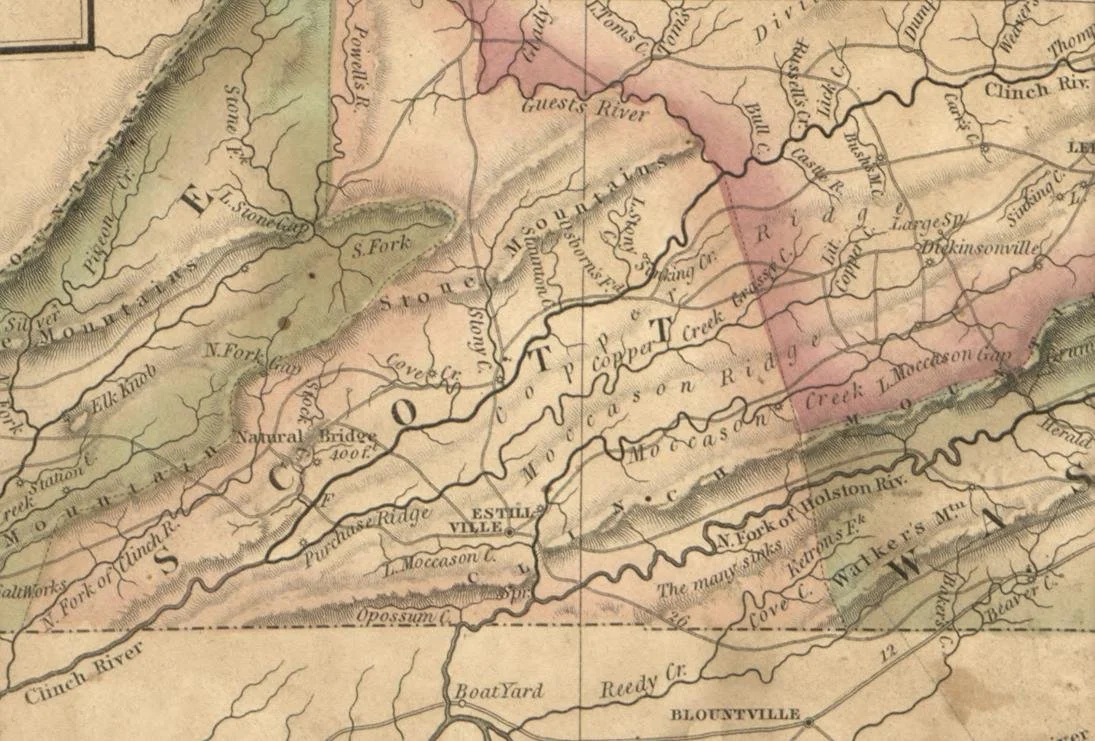
On January 28, 1823, Isaac Richmond seized a free woman named Barbara Day in Scott County, Virginia, and attempted to take her out of the state. Barbara had been emancipated by the will of Stephen Osborne, who died in October 1820. Richmond, who had married one of Stephen’s daughters, claimed Barbara as property.
The next day, three men took her back.
William Robertson led the rescue. With him were John Ashby and Lewis Ashby — free men of color from the family of Phillip Ashby, Barbara’s father-in-law through her husband Austin Day. Richmond charged all three with felonious robbery of “one Negro woman slave” valued at $350.
On February 13, 1823, the Scott County court examined the charges and discharged all three. Two days later, the same court charged Isaac Richmond with a felony: stealing “a certain negro woman named Barbary who was emancipated by the last will & testament of Stephen Osborne.”
Read that again. The court discharged the rescuers and charged the kidnapper. And in the felony charge, the Commonwealth explicitly recognized Barbara as a free woman.
What Makes This Remarkable
This is Virginia in 1823. Slavery is the law of the land. Free people of color can be re-enslaved for staying in the state too long. A white man claiming ownership of a Black woman had every structural advantage. And two free Black men and a white man physically took that woman back from him, and the court sided with them.
This didn’t happen because the system was just. It happened because William Kilgore — a prominent white citizen who had been Stephen Osborne’s neighbor and who believed Barbara was free — posted a $1,200 bond in February 1823 to prevent her removal. It happened because Robertson and the Ashbys were willing to put their bodies on the line. It happened because enough people in this community knew Barbara, knew Stephen’s will, and were willing to say so.
Jonathan Osborne, Stephen’s son, posted the $2,000 bail for Richmond. He was actively supporting the man who attempted to kidnap Barbara. This is the same Jonathan who would later consolidate ownership of Barbara’s twin children, James Washington and Lucinda, and who held enslaved people through the Civil War. He knew what he was doing.
The Community Network
Before I found the court minutes, I knew the Ashby family from tax records. Phillip Ashby, free man of colour, four horses, North District. John Ashby, James Ashby, free negroes/mulattoes. I knew Austin Day had married Barbara. But I didn’t know the Ashby family had physically intervened to protect her.
The rescue makes sense once you understand the connections. Austin Day was Lisha Grant’s son. Lisha lived with Phillip Ashby. Barbara married Austin, which made her part of the Ashby/Grant/Day network. When Richmond came for Barbara, the Ashby men weren’t protecting a stranger. They were protecting family.
And there’s William Robertson — a white man who led the rescue and then stood as a prosecution witness against Richmond. We don’t know his exact relationship to the family, but he was willing to face felony charges alongside two free Black men to protect a free Black woman. That’s worth knowing.
For Researchers
Court minute books are not indexed by subject. You won’t find “kidnapping” or “resistance to slavery” in the table of contents. You have to search them — by name, by date range, by patience. The rescue of Barbara Day appears in two entries in Scott County Minute Book 2, separated by two days and a few pages. If you weren’t looking for these names, you’d flip right past them.
FamilySearch has digitized many Virginia county minute books. Full-text search, when available, is a godsend. That’s how I found these entries — searching for “Ashby” in Scott County records and landing on a court proceeding I never expected.
In the final post, I’ll pull back and look at the broader free Black community of Scott County — the families who lived on Big Moccasin Creek and Copper Creek, who owned horses and sold land and got indicted for selling whiskey and raised children and, once in a while, beat the charges.
Part 4 of 5 in the Series: “Bound, Free, and In Between: Free People of Color in Scott County, Virginia”
This five part series is based on original research conducted in February–March 2026 using digitized records from FamilySearch, the Library of Virginia’s Chancery Records Index, and the Virginia Untold collection. Profiles for many of the individuals discussed are available or forthcoming on WikiTree. The research is ongoing.