The Handkerchief, the Sifter, and the Family They Revealed
How a petty lawsuit over a few dollars cracked open the story of a free Black family network in antebellum Virginia.
I almost skipped it.
The case file was listed as Adam Waterford v. Phillip Ashby, Scott County, Virginia, 1826. A civil dispute. The surnames on the index caught my eye — Ashby, Day, Jett, Waterford, Wilson — because I was researching free persons of color in Scott County and had already been tracking the Ashby and Day families through tax records. But a squabble between two men over a few dollars? How useful could it be?
Turns out, extraordinarily useful.
Here’s what the case was actually about: a bushel of flaxseed, a handkerchief, a steer, some sheep, a sifter too coarse for old corn meal, and years of disputed labor. The amounts in question were tiny. The judgment that started it all was ten dollars. But when a family argues over small things, they say everything. Names come out. Relationships surface. People testify under oath about who lived where, who worked for whom, and who was kin to whom.
By the time I finished reading, I had identified a mother and at least seven of her children. I had connected three families across two states. I had found depositions taken in Tennessee from a man I’d been trying to place for weeks. And I had discovered that a free Black family physically intervened to rescue a woman from kidnapping.
None of that was in the case index. All the index said was “Adam Waterford v. Phillip Ashby.”
The Lesson for Researchers
If you work with African American families before the Civil War, you already know that early records present challenges. Slave schedules in 1850 give you tick marks in columns, not names. Tax lists might or might not identify someone as a free person of color. Vital records often don’t exist if they were not required by law at the time. Every document matters.
Chancery cases — the equity court disputes that generated bills of complaint, answers, depositions, and accounts — are some of the richest sources available. And the ones that seem least promising can be the most revealing. Nobody guards their words in a fight about a handkerchief. They just talk. And when they talk, they name names.
Adam Waterford named his wife’s mother, her stepfather, her sisters, her brothers, and their whole tangled history. Phillip Ashby, defending himself, described exactly who lived in his house and what they did there. Witnesses filled in the gaps. A father testified about his sons. A stepdaughter described watching her sister cry over a few yards of linen.
The Virginia chancery records are digitized and indexed at the Library of Virginia’s Chancery Records Index. You can search by county and by party name. If you’re researching any Virginia family — Black or white — and you haven’t searched the chancery index, you’re leaving the best stories on the shelf.
What’s Coming
In the next post, I’ll introduce you to the woman at the center of this family network — Lisha Grant, a free woman of color first documented at Montgomery County courthouse in 1793 — and the complicated household she built with a man named Phillip Ashby near a place called Osborne’s Ford on the Clinch River.
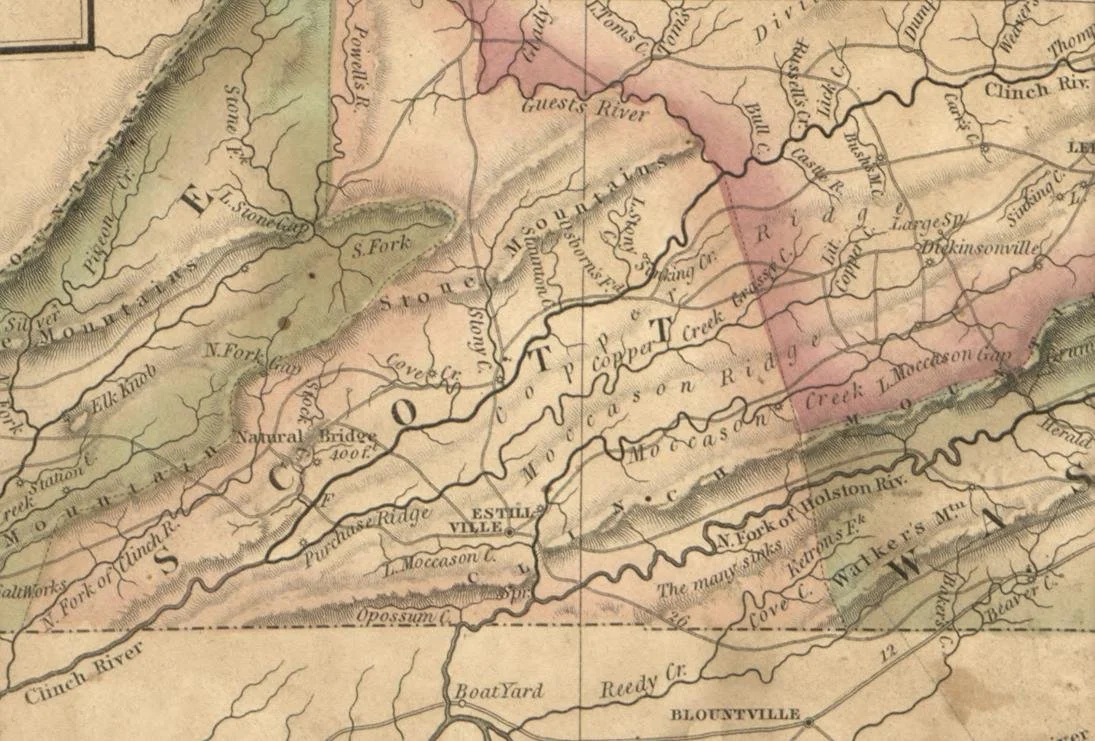
Part 1 of 5 in the Series “Bound, Free, and In Between: Free People of Color in Scott County, Virginia”
This five part series is based on original research conducted in February–March 2026 using digitized records from FamilySearch, the Library of Virginia’s Chancery Records Index, and the Virginia Untold collection. Profiles for many of the individuals discussed are available or forthcoming on WikiTree. The research is ongoing.